
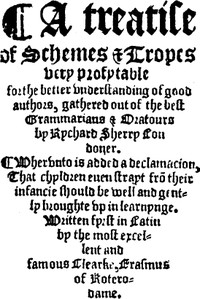
A Treatise of Schemes and Tropes by Richard Sherry
Okay, let's break this down. 'A Treatise of Schemes and Tropes' isn't a novel with a plot. Think of it as a very old, very passionate user's manual for the English language. Published in 1550, it's one of the earliest books in English entirely about rhetoric—the art of using language effectively.
The Story
There's no character arc, but there is a mission. Richard Sherry, a schoolmaster, looked at the classical works of Cicero and Quintilian and noticed English didn't have a guide like that. His 'story' is his effort to build that guide. He catalogs and explains all the fancy tricks—the 'schemes' (like alliteration or chiasmus) and 'tropes' (like metaphor or irony)—that writers and speakers use. He gives them names, defines them, and provides examples, often from the Bible or classical texts. The narrative is the journey of organizing the chaotic beauty of spoken English into a system you can learn and use.
Why You Should Read It
Reading this is like finding the blueprint for a cathedral. You see the bones of the language before the great writers of the Elizabethan era built their masterpieces on top of it. It’s humbling and exciting. Sherry isn't some dry academic; you can feel his urgency. He truly believed that equipping people with these tools would make them better thinkers, writers, and citizens. When he explains a metaphor, you're seeing someone puzzle out a concept we now take for granted. It makes you hyper-aware of the crafted nature of every sentence you read or write today.
Final Verdict
This isn't for everyone. If you want a fast-paced narrative, look elsewhere. But if you're a word nerd, a writer, a history lover, or a student of how ideas develop, this is a treasure. It's perfect for anyone who has ever enjoyed Shakespeare, wondered about the origins of rhetorical devices, or just likes the idea of holding a conversation with a thoughtful mind from nearly 500 years ago. Dive in for a unique look at the moment English started to get its act together.
Kevin Allen
1 year agoComprehensive and well-researched.
Emily Smith
2 months agoEssential reading for students of this field.
Kevin Garcia
1 year agoEnjoyed every page.
Ava Harris
6 months agoCitation worthy content.




Linda Thompson
9 months agoI started reading out of curiosity and the depth of research presented here is truly commendable. I couldn't put it down.