eBooks
91 Books foundThe EXUAR Public Domain Literature Library offers 91 freely accessible books drawn from the Project Gutenberg collection, supplemented by editorial reading notes, context essays, and research aids. Each work has been selected for its historical, literary, or documentary value, and every record includes author details, keywords, a catalogue note describing the content, and links to the full text. The library is organized into four thematic categories that help readers navigate by genre or subject, but each book can also be discovered through direct browsing, keyword search, or the complete list at /ebooks.
Readers may explore the catalogue by category, each grouping together works that share a common form or thematic concern. Alternatively, the full alphabetized list of titles provides a straightforward way to scan for specific authors or topics. Every book page contains a detailed editorial note that explains the work's context, highlights notable features, and suggests connections to other titles in the library. The catalogue note field in each record—drawn from EXUAR Catalogue's reading—offers a concise summary of what the book contains, without claiming to replace a full reading.
Bibliographic information includes the title, author(s), digital source (Project Gutenberg), subject keywords, and a target-reader designation. The catalogue note is the editorial statement prepared for this site; it may reference specific excerpts or themes from the work, but it is not a comprehensive analysis. Dates of original publication are not always present in the source metadata and are therefore not supplied here unless explicitly stated in the record. Internal links connect to other books within the catalogue and to the editorial standards page.
All texts in this catalogue originate from Project Gutenberg, a digital library of public-domain works. The editorial content—including catalogue notes, reading companions, and category guides—is prepared independently by the catalogue project is made that every book has been read in its entirety; the notes are based on selected excerpts and editorial judgment.
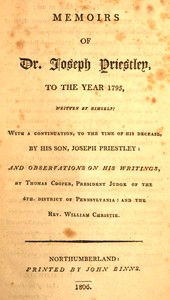
For those new to the collection, consider these focused approaches. Path One: Biography and Personal Testimony — Begin with John Jacob Astor by Elbert Hubbard (id 213), Josiah Henson's narrative (id 262), and Etsu Sugimoto's memoir (id 291). These works offer contrasting voices and periods, from American enterprise to slavery and cross-cultural experience. Path Two: Memoirs of Conflict and Change — Annie Besant's autobiography (id 227), Clara Louise Kellogg's opera life (id 239), and Joseph Priestley's memoirs (id 298) illuminate social, artistic, and scientific upheaval in the 19th century. Path Three: Diaries and Journals of Inner Life — Opal Whiteley's journal (id 241), Frederic Kitton's topographical guide to Dickens (id 268), and Georg Ebers's life of Egyptologist Richard Lepsius (id 299) reveal how personal observation and professional dedication intersect.
The four categories—Biography & Personal Testimony, Memoirs, Diaries & Journals, and Letters & Recollections—are not rigid literary classifications. They serve as organizing tools; some books could fit into more than one group. The editorial notes attached to each title provide additional guidance for understanding where a work sits in relation to others. Readers are encouraged to cross boundaries and follow their own interests.
All books are available for download in standard formats from their individual pages. No registration is required. The catalogue is maintained by the catalogue project and may be updated periodically. For questions or corrections, use the contact form. Further information about the library's purpose and editorial practices is available on the about page and the editorial standards document.
Bibliographic dates and catalogue measurements
The catalogue distinguishes the Project Gutenberg digital release from a work’s original or first publication. Project Gutenberg is identified as the digital source for the edition available here; its release year is therefore shown as Gutenberg Release Year, not as the work’s original publication year.
When an explicit first-publication or issue date can be supported directly by the title or issue information, it may be shown separately as First Publication Year. When that date cannot be confirmed, the catalogue displays Not confirmed rather than guessing a year.
Where the source text can be measured reliably, the catalogue may provide word count and estimated reading time. These measurements describe reading scope and are not quality rankings.
The current catalogue contains 4 active subject categories: Biographies, Memoirs, Diaries Journals, and Letters Recollections. Categories are browsing aids and may overlap where a work reasonably fits more than one subject.
- Featured