1

A surgeon in khaki — Story, Setting & Ideas
(0 User reviews)
1061
Project Gutenberg
2025
Not confirmed
World War, 1914-1918 -- Medical care; World War, 1914-1918 -- Campaigns -- France; World War, 1914-1918 -- Campaigns -- Belgium; World War, 1914-1918 -- Personal narratives, New Zealand; Martin, Arthur Anderson, 1876-1916; Surgeons -- New Zealand -- Biography
Readers of public-domain and historical texts
Project Gutenberg digital edition
en
Edition facts
Words
76,034
Reading time
331 min
Text sections
23
The source record for A surgeon in khaki — Story, Setting & Ideas measures this digital text at 76,034 words, 5 hr 31 min estimated reading time, and 23 detected text sections.
The text analysis averages about 21.1 words per sentence, while the detected sections provide another way to judge how the source is divided.
Project Gutenberg metadata also associates the work with “World War, 1914-1918 -- Medical care,” connecting these edition facts with the source record’s subject description.
Source:
Project Gutenberg record #77265
New Zealand surgeon Arthur Anderson Martin's 1915 memoir of his service with the British Expeditionary Force in France and Flanders, offering a medical officer's perspective on the 1914 campaigns, from Le Havre to Ypres, with vivid, often disconnected impressions of battlefield medicine, troop movements, and the dark humor of rumor.
Editorial Edition Score
4.9/5
★★★★★
★★★★★
Calculated from edition completeness, EPUB availability, text structure and catalogue metadata. Not a user rating.
How this score is calculated
- Description quality20 pts
- Title & short description10 pts
- Source metadata20 pts
- Text length15 pts
- Chapters / structure15 pts
- EPUB file integrity20 pts
Total of 100 points, scaled to a 2.5-5.0 range. Editions with an empty description or a missing EPUB file are not scored.
Edition quality
Public-domain source text
Read the source text
The source text is kept in the dedicated reader, separate from this catalogue record and its commentary.
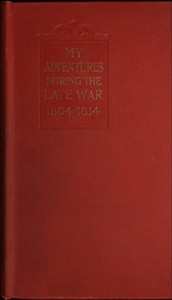
Arthur Anderson Martin, a New Zealand surgeon serving with the British Expeditionary Force, published A Surgeon in Khaki in 1915, while the war was still raging. The book is not a polished history but a collection of “disconnected” notes, as Martin himself admits in the preface, reflecting the fragmented nature of his experience. The catalog subjects list World War I medical care and campaigns in France and Belgium, but the excerpts reveal a work more concerned with the texture of military life—the long marches, the rumors, the rats—than with clinical procedure. Martin’s voice is wry and observant, noting how a false report of the Kaiser’s death “cheered the men up wonderfully” and how the Crown Prince was repeatedly “buried” in rumor. This editorial note examines how the book’s catalog categories align with, and sometimes obscure, the actual content of Martin’s narrative.
Medical Care vs. Military Movement
The catalog subject “World War, 1914-1918 -- Medical care” suggests a focus on surgery, hospitals, and triage. Yet the excerpts show Martin spending far more words on the logistics of moving troops and equipment than on treating wounds. He describes a “hard gruelling march of fifteen to eighteen miles through the night” and the chaos of “crossing a line of communication” at Corcy, where French reinforcements and his brigade converged. Medical care appears obliquely: he mentions being a “Surgical Specialist” at No. 6 General Hospital in Rouen, but the narrative dwells on the journey to that posting. The disconnect between catalog and content is striking—Martin’s memoir is less a clinical record than a soldier’s travelogue, with the surgeon’s perspective providing a unique but not dominant lens.
Rumor as a Feature of Front-Line Life
One of the most vivid elements in the excerpts is Martin’s treatment of rumor. He recounts how a false message—“The Kaiser is dead”—spread down a column at night, generating “distant cheering” that traveled “quickly down to us.” Martin and his comrades initially laughed and did not pass it on, but pressure from ahead forced compliance. He also details the “harrowing story of the Prince with the velvet mask,” a Dumas-like tale of a wounded officer concealed behind a mask, which circulated widely and was “believed by many.” These anecdotes reveal a social history of the front, where information was scarce and soldiers created their own narratives. The catalog does not capture this dimension, yet it is central to the book’s texture.
The Disconnected Structure as a Method
Martin’s preface explicitly states that his notes are “disconnected” because “the things seen presented themselves in a disconnected way.” This structural choice is not a flaw but a deliberate reflection of wartime perception. The excerpts jump from a march through a forest “in Cimmerian darkness” to a rumor about the Crown Prince, then to a description of a “lean-to” at Soissons. The book’s 23 text sections and 19 chapters mirror this fragmentation, covering locations from Le Havre to Ypres without a continuous plot. The catalog’s subject “Personal narratives, New Zealand” fits, but the work’s form—a series of impressions rather than a linear story—challenges the expectation of a straightforward memoir. Readers should approach it as a mosaic, not a narrative.
Martin’s A Surgeon in Khaki is best read as a primary source for the everyday experience of a medical officer in 1914, rather than a systematic account of military medicine. Its value lies in the details: the rats named “Von Hindenberg,” the “grey dawn” after a night march, the way a false rumor could lift spirits. The catalog subjects point to the war’s official categories, but the book itself resists them, offering a personal, fragmented view that is both specific and elusive.
I keep thinking about that surgeon’s scattered war notes—how the mud and rumor felt more real than any strategy. It reminded me, oddly, of the quiet ways we shed old certainties. There’s something in Up from Methodism — Context and Discussion that carries that same weight, the slow untangling of a self you thought was fixed. Both left me sitting still, long after closing the page.
There are no reviews for this eBook.
There are no comments for this eBook.
Reader reflection
Record your reading impressions
A brief reflection can help important ideas stay with you longer.
Your progress
0
/
10
2
Was reading this book enjoyable?
3
How likely are you to recommend this book?
4
How much effort did this book require?
5
Did the book deliver what you hoped for?
6
Would you start a conversation about this book?
7
What was its emotional impact?
8
Do you expect to return to this book?
9
Which lesson or insight stayed with you?
10