1

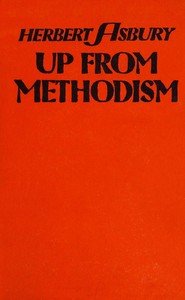
Up from Methodism — Context and Discussion
(0 User reviews)
448
Project Gutenberg
2024
Not confirmed
Asbury, Herbert, 1891-1963 -- Childhood and youth; Methodists -- Missouri -- Farmington -- Biography; Methodist Church -- Controversial literature; Farmington (Mo.) -- Biography
Readers of public-domain and historical texts
Project Gutenberg digital edition
en
Edition facts
Words
44,161
Reading time
193 min
Text sections
12
This digital edition of Up from Methodism — Context and Discussion is described by source-level measurements including 44,161 words, 3 hr 13 min estimated reading time, and 12 detected text sections.
The text analysis averages about 26.0 words per sentence, while the detected sections provide another way to judge how the source is divided.
Project Gutenberg metadata also associates the work with “Asbury, Herbert, 1891-1963 -- Childhood and youth,” connecting these edition facts with the source record’s subject description.
Source:
Project Gutenberg record #73085
Herbert Asbury's memoir of growing up in a devout Methodist household in Farmington, Missouri, structured around the clash between religious taboos and boyish curiosity, with recurring images of legs, virgins, and the thin line between sacred and secular emotion.
Editorial Edition Score
4.8/5
★★★★★
★★★★★
Calculated from edition completeness, EPUB availability, text structure and catalogue metadata. Not a user rating.
How this score is calculated
- Description quality20 pts
- Title & short description10 pts
- Source metadata20 pts
- Text length15 pts
- Chapters / structure15 pts
- EPUB file integrity20 pts
Total of 100 points, scaled to a 2.5-5.0 range. Editions with an empty description or a missing EPUB file are not scored.
Edition quality
Public-domain source text
Read the source text
The source text is kept in the dedicated reader, separate from this catalogue record and its commentary.
Herbert Asbury opens his memoir with a genealogical catalog that reads like a parody of Methodist hagiography: his great-great-uncle was Francis Asbury, the first Methodist bishop ordained in America, while his great-grandfather founded the first Methodist church west of the Catawba River and converted an entire Indian tribe. The family lore is laced with a comic precision—every major event in the great-grandfather's life happened on a Sunday. This structural pattern of sacred coincidence sets the tone for a book that treats religious earnestness with a skeptic's eye, using the very machinery of Methodist testimony to undermine it.
The Geometry of Salvation
The book's chapter titles map a spatial and moral journey: from “Home Life of a Boy Destined for Heaven” to “Conclusions of a Man Gone to the Devil.” Asbury moves through the town of Farmington as through a stage set, each location—the church, the store, the hay ride—becoming a site where religious authority and bodily impulse collide. The recurring image of legs—a boy's leg touching a girl's on a hay ride, a woman riding astride—becomes a shorthand for the erotic anxiety that pervades Methodist discipline. Asbury notes that the old Brother who interrogated him about the hay ride “gloated and trembled” over the sin of proximity, revealing the voyeuristic pleasure beneath the piety.
The Thin Line Between Emotions
Asbury draws a structural parallel between religious and secular emotion, arguing that “the line of demarcation is very thin.” He observes that young men knew “religious emotion is very akin to secular emotion” and exploited camp meetings and revivals as opportunities for seduction. The buggies around the meeting tent, he writes, were “filled with men and women petting, or, as we called it then, spooning.” This observation recurs across multiple chapters, suggesting a deliberate pattern: the same fervor that drives a sinner to the altar can be redirected toward the opposite sex. Asbury does not moralize but reports, letting the juxtaposition of holy and profane speak for itself.
The Machinery of Testimony
The book's structure mimics the revivalist's toolkit: chapters titled “The Machinery of Salvation,” “Taboos of the Lord's Day,” and “Agents of God” break down the components of Methodist culture into analyzable parts. Asbury treats the church's apparatus—preachers, brothers, sisters, camp meetings, protracted meetings—as a system of social control and emotional release. He notes that the Sisters described Heaven as populated by “handsome, stalwart young men, presumably virgins,” and that one Sister prayed fervently to be made an exception to the rule of no female angels. These details, drawn from the excerpts, show Asbury's method: he takes the church's own language and turns it back on itself, exposing the human desires that the system both channels and denies.
Movement Between Scenes
The narrative moves rapidly between domestic interiors, church services, and public streets, each scene linked by a recurring figure—the preacher, the brother, the sister—who embodies a particular aspect of Methodist authority. Asbury's transitions are abrupt, often signaled by a shift in tone from genealogical catalog to anecdotal vignette. In one passage, he moves from the hay ride interrogation to the story of the storekeeper who abandoned his customer to watch a woman ride astride, then to a general reflection on the Sisters' fantasies. This montage-like structure emphasizes the pervasiveness of religious surveillance: no space, not even the store or the street, is free from the church's gaze.
Readers approaching Up from Methodism should attend to Asbury's use of repetition—the same images of legs, virgins, and emotional manipulation recur across chapters, building a cumulative portrait of a community obsessed with sin. The book is not a straightforward autobiography but a structural critique, using the church's own methods of testimony and classification to expose its contradictions. The excerpts suggest a work that rewards careful attention to its patterns of imagery and scene construction.
Years among the shelving have taught me how youthful restlessness tints both sacred and profane longings. I think of Asbury's boyish fidgeting in the pew, and then of another wanderer's raw impressions in My adventures during the late war — Background and Themes. Both are memoirs of a body discovering its own impulses, uncertain whether the stirring is reverence or rebellion. That tremulous boundary—what hushed feeling belongs to God, what to the world—binds them quietly.
There are no reviews for this eBook.
There are no comments for this eBook.
Reader reflection
Record your reading impressions
A brief reflection can help important ideas stay with you longer.
Your progress
0
/
10
2
How much did you enjoy the reading experience?
3
Would you pass this book on to a friend?
4
How much effort did this book require?
5
Did the book meet your expectations?
6
How useful were the ideas in this book?
7
What did you appreciate most?
8
How strong was your personal connection to the text?
9
What is the main idea you are taking away?
10