
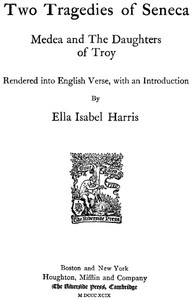
Two Tragedies of Seneca: Medea and The Daughters of Troy by Lucius Annaeus Seneca
Let's talk about these two plays. They're brutal, beautiful, and pack a punch in a very small package.
The Story
In Medea, the famous sorceress has helped Jason secure the Golden Fleece, betrayed her family, and borne him children. Now, Jason is ditching her to marry a princess for political power. The play watches Medea's world shatter. We see her grief turn to a cold, calculated fury. She doesn't just get mad; she plans the most horrific revenge imaginable, asking herself what would hurt Jason the most. The answer is as devastating as it is logical in her twisted state.
The Daughters of Troy starts where Homer's Iliad ends. Troy has fallen. The men are dead. This play follows the captured Trojan women – Queen Hecuba, the prophetess Cassandra, Andromache – as they are parceled out as slaves to the Greek victors. There's no battle here. The tragedy is in the waiting, the mourning, and the crushing realization that their lives are now property. It's a play about the aftermath, the hollow victory, and the endless sorrow of the survivors.
Why You Should Read It
I was blown away by how these plays speak to now. Seneca isn't interested in heroes. He's obsessed with the psychology of people in extreme pain. Medea isn't a monster; we see her talk herself into monstrosity. Her famous soliloquies are like watching a storm build inside a person. In Daughters of Troy, the power is in the silence between the wails. The women's grief is a living character. It made me think about all the stories we don't hear after the wars on the news – the stories of those left behind. These plays are intense, sometimes hard to read, but they feel honest in a way that's rare.
Final Verdict
This is perfect for anyone who loves complex, difficult characters and doesn't mind their drama dark and without easy answers. If you enjoyed the moral complexities of Game of Thrones or the raw emotion of a Greek tragedy, you'll find a friend in Seneca. It's also a great, accessible entry point into Roman literature. Don't go in expecting a happy ending. Go in to see how people break, how they survive, and what remains when everything else is gone. Just be ready to sit with those thoughts for a while after you close the book.
Elizabeth Wright
4 months agoI didn't expect much, but the flow of the text seems very fluid. Truly inspiring.
Deborah Taylor
4 months agoClear and concise.
Thomas Johnson
1 year agoI had low expectations initially, however it challenges the reader's perspective in an intellectual way. A true masterpiece.
Mark Wright
10 months agoHonestly, the narrative structure is incredibly compelling. I learned so much from this.







Emma Jackson
1 year agoLoved it.