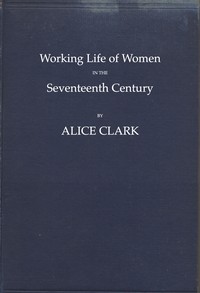
Working Life of Women in the Seventeenth Century by Alice Clark
Alice Clark's book isn't a novel with a plot, but it tells a powerful story about change. She looks at England in the 1600s and pieces together the evidence of women's economic lives. She explores different areas like agriculture, textiles, and crafts, showing how women were often central to family businesses and the local economy. The story she uncovers is one of gradual but dramatic shift. At the start of the century, a woman might be listed as a 'brewster' (a female brewer) or manage a farm alongside her husband. By the end, those opportunities were shrinking. Clark argues that the rise of capitalism and new ways of organizing work didn't just change the economy—it redefined what was considered 'women's work,' pushing it increasingly into the unpaid, domestic sphere.
Why You Should Read It
You should read this because it makes history feel personal and relevant. Clark writes with a quiet passion for her subject. She isn't just listing facts; she's building a case to recover a lost part of our past. It’s eye-opening to see how much our ideas about 'a woman’s place' are tied to a specific historical moment, not some eternal truth. The book is filled with small, telling details from real lives—like a widow continuing her husband's trade or the rules that slowly excluded women from guilds—that are more compelling than any dry statistic. It connects directly to conversations we still have today about work, value, and gender.
Final Verdict
This book is perfect for anyone curious about social history, feminism, or how everyday life was lived in the past. It's for the reader who enjoys authors like Bill Bryson or Ruth Goodman, who make history engaging and human. Be warned: it was written in 1919, so the style is clear but not super modern. Think of it as a foundational text, the original detective work that later popular historians built upon. If you want to understand the roots of the modern workplace and family, start here. It’s a quiet, brilliant piece of historical recovery that deserves its classic status.