1

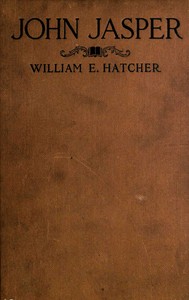
John Jasper: The unmatched Negro philosopher and preacher — Inside the Classic
(0 User reviews)
675
Project Gutenberg
2022
Not confirmed
African Americans -- Biography; African American clergy -- Biography; Jasper, John, 1812-1901; Richmond (Va.) -- Biography
Readers of public-domain and historical texts
Project Gutenberg digital edition
en
Edition facts
Words
47,856
Reading time
209 min
Text sections
4
John Jasper: The unmatched Negro philosopher and preacher — Inside the Classic can be approached with a clearer sense of reading commitment from its source measurements: 47,856 words, 3 hr 29 min estimated reading time, and 4 detected text sections.
The text analysis averages about 21.4 words per sentence, while the detected sections provide another way to judge how the source is divided.
Project Gutenberg metadata also associates the work with “African Americans -- Biography,” connecting these edition facts with the source record’s subject description.
Source:
Project Gutenberg record #68205
Examines William E. Hatcher's biography of John Jasper, focusing on Hatcher's authorial choices in diction, dialogue, and description. The note highlights how Hatcher portrays Jasper's unlettered eloquence, his confrontations with critics, and the tension between Jasper's antebellum roots and post-war ministry, without claiming full knowledge of the book.
Editorial Edition Score
4.6/5
★★★★★
★★★★★
Calculated from edition completeness, EPUB availability, text structure and catalogue metadata. Not a user rating.
How this score is calculated
- Description quality20 pts
- Title & short description10 pts
- Source metadata20 pts
- Text length15 pts
- Chapters / structure15 pts
- EPUB file integrity20 pts
Total of 100 points, scaled to a 2.5-5.0 range. Editions with an empty description or a missing EPUB file are not scored.
Edition quality
Public-domain source text
Read the source text
The source text is kept in the dedicated reader, separate from this catalogue record and its commentary.
William E. Hatcher's biography of John Jasper opens with a direct address to the reader, warning that the subject is a negro "covered over with ante bellum habits" and that those who cannot appreciate greatness in a black skin should look elsewhere. This framing immediately establishes Hatcher's authorial stance: he is a white Virginian presenting a figure he considers unmatched, yet he distances himself from both the "educated negro preacher" and the "new order." The diction is deliberately colloquial—Jasper is called "unlettered and grievously ungrammatical"—while the narrative voice remains that of an admiring but condescending observer.
Hatcher's Portrayal of Jasper's Speech
Hatcher frequently reproduces Jasper's dialect in reported speech, but he also describes its effect. He notes that Jasper "never grew away from the tastes, dialects, and manners of the bondage times," and that the "raw scholarship of the new 'ish'" was "sounding brass" to him. The biographer's own prose shifts between formal analysis and mimicry of Jasper's cadence, as when he writes that Jasper's thoughts "ran in schools" like fish. Hatcher does not claim to quote Jasper verbatim; instead, he filters Jasper's voice through his own editorial lens, creating a portrait of a man whose power lay in oral delivery rather than written composition.
The Conflict with the Ebenezer Church Council
One of the most detailed episodes in the excerpts is Jasper's confrontation with a church council over accusations of "base fabrication." Hatcher describes the scene with vivid, almost novelistic detail: Jasper's "soul was stirred with a furious resentment," and when he finished, "it would be hard to say how many baskets would have been required to hold the fragments." The biographer emphasizes Jasper's refusal to recognize the council's authority, his insistence on "the independence of the individual Baptist church," and his rhetorical victory when the letter-writer claimed his words were misdirected. Hatcher's language—"crippled in both feet and respected by none"—reveals his sympathy with Jasper's underdog position.
Jasper's Meditative Pleasures and Relentless Fame
Hatcher describes Jasper's vacations as times of "meditative sort," where his only sport was fishing. Yet even in retreat, "his fame was there to confront and to entangle him." The biographer uses a simile: "Like the fish they ran in schools, but unlike the fish they ran in all weathers and in all seasons." This passage reveals Hatcher's tendency to blend natural imagery with commentary on Jasper's relentless public demand. He claims Jasper preached in "almost every county and city in Virginia," positioning him as "the one ever sought Virginia preacher." The description is admiring but also underscores the tension between Jasper's desire for quiet and his inescapable celebrity.
Hatcher's Editorial Voice and Its Limitations
Throughout the excerpts, Hatcher interjects his own opinions, calling Jasper "unmatched by any man of his race" and branding imitators "of another and of a baser sort." He acknowledges that educated negro preachers "drew back from this man" and considered him "an anachronism." Yet Hatcher never provides Jasper's own perspective on these conflicts; the narrative remains firmly in the biographer's voice. The reader is given Hatcher's interpretation of events—such as the council meeting—without direct access to Jasper's words or thoughts. This editorial distance is a key feature of the text, shaping how Jasper's story is told.
Readers should approach this biography aware that Hatcher writes as an admiring but external chronicler. His choices in diction and description reveal as much about his own attitudes as about Jasper. The excerpts offer a vivid sense of Jasper's public confrontations and personal habits, but the full book likely contains more of Hatcher's interpretive framing. Pay attention to moments where Jasper's voice breaks through the editorial filter, and consider how Hatcher's language shapes the portrait of a man he calls "unmatched."
Reading how Hatcher shaped Jasper’s voice, I kept thinking about people we only meet through someone else’s memory. It reminded me of that quiet feeling with Samuel Pepys and the World He Lived In — Reading Companion, where a life feels close, yet never fully ours. Strange, how another’s telling can leave such a gentle ache.
There are no reviews for this eBook.
There are no comments for this eBook.
Reader reflection
Before you leave, reflect on the book
Use these questions to collect your thoughts before moving on.
Your progress
0
/
10
2
How did the book work for you overall?
3
Would you pass this book on to a friend?
4
What was the reading difficulty like?
5
Did you relate to its people, ideas, or situations?
6
How strongly did the book affect you emotionally?
7
Did you gain anything practical from the text?
8
Could you see yourself revisiting this book?
9
In one sentence, what did you learn?
10