1

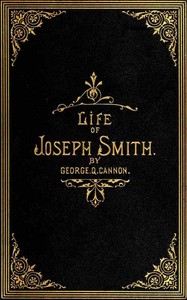
The Life of Joseph Smith, the Prophet — Text and Context
(0 User reviews)
361
Project Gutenberg
2019
Not confirmed
Latter Day Saints -- Biography; Smith, Joseph, Jr., 1805-1844; Church of Jesus Christ of Latter-Day Saints -- Presidents -- Biography; Latter Day Saint churches -- Presidents -- Biography
Readers of public-domain and historical texts
Project Gutenberg digital edition
en
Edition facts
Words
185,466
Reading time
807 min
Text sections
16
For The Life of Joseph Smith, the Prophet — Text and Context, the stored edition analysis reports 185,466 words, 13 hr 27 min estimated reading time, and 16 detected text sections.
The text analysis averages about 26.8 words per sentence, while the detected sections provide another way to judge how the source is divided.
Project Gutenberg metadata also associates the work with “Latter Day Saints -- Biography,” connecting these edition facts with the source record’s subject description.
Source:
Project Gutenberg record #59970
George Q. Cannon's 1888 biography of Joseph Smith, written from a Latter-day Saint perspective, traces Smith's life from his New England ancestry through the Restoration, Nauvoo period, and martyrdom. The author, a Church leader, composed parts while imprisoned, lending a personal, devotional tone. Excerpts reveal a narrative that blends scriptural language, detailed persecution accounts, and an emphasis on Smith's prophetic calling.
Editorial Edition Score
4.8/5
★★★★★
★★★★★
Calculated from edition completeness, EPUB availability, text structure and catalogue metadata. Not a user rating.
How this score is calculated
- Description quality20 pts
- Title & short description10 pts
- Source metadata20 pts
- Text length15 pts
- Chapters / structure15 pts
- EPUB file integrity20 pts
Total of 100 points, scaled to a 2.5-5.0 range. Editions with an empty description or a missing EPUB file are not scored.
Edition quality
Public-domain source text
Read the source text
The source text is kept in the dedicated reader, separate from this catalogue record and its commentary.
George Q. Cannon’s The Life of Joseph Smith, the Prophet opens with a preface dated October 1, 1888, written from the Utah Penitentiary. Cannon, a Latter-day Saint leader imprisoned for his faith, frames the biography as a “loving duty” and a comfort amid persecution. The preface immediately establishes a dual audience: the Saints, who may find joy in the narrative, and the world, which Cannon hopes will judge Smith more fairly. The author’s imprisonment invests the work with a personal stake, as he notes that the closing chapters were “finished in prison for adherence to the principles which they taught.” This context shapes the biography’s tone—devotional, defensive, and urgent—rather than neutral or academic.
A Narrative Forged in Adversity
Cannon’s preface and the early chapters reveal a biography written under constraint. The author acknowledges that “the circumstances which surrounded its preparation were not favorable to the collection and arrangement of materials,” yet he asserts the work is “truthful and just.” This tension between imperfection and conviction runs through the text. The opening chapters trace Joseph Smith’s lineage and early life, emphasizing his “humble extraction” and the “godliness and fair fame” of his ancestry. Cannon uses scriptural cadences, describing Smith’s first vision with the phrase “This is my Beloved Son: Hear Him,” and frames the angel Moroni’s visits as a series of “successive visits and ministrations.” The narrative voice is reverent, often employing elevated diction that aligns Smith’s story with biblical prophecy.
Persecution as a Structural Motif
Throughout the excerpts, persecution is not merely a theme but a structural device. Chapter 42 details the Prophet’s imprisonment in Liberty Jail, where he and his companions were “loaded with chains” and “poisoned.” Cannon reports that “human flesh was served to them as meat,” which the guards called “Mormon beef,” and that Smith warned his companions not to touch it. Such graphic details recur, reinforcing a narrative of innocence besieged. The legal system is depicted as corrupt: a “drunken jury” and judges “hardened” against the Saints. Cannon’s language—calling the examination a “farce”—leaves no doubt about his perspective. This pattern of oppression and divine endurance gives the biography a hagiographic quality, where suffering validates Smith’s prophetic role.
The Author’s Imprisonment and the Text’s Authority
Cannon’s own incarceration lends the biography a unique authority. He writes that sending the work away is “like being torn from a beloved companion,” a metaphor that personalizes the narrative. The preface’s location—“Utah Penitentiary, October 1, 1888”—is a paratextual detail that colors every page. Cannon’s imprisonment mirrors Smith’s, creating a parallel between author and subject. This is not a dispassionate history but a testimony from one who shares the Prophet’s fate. The biography thus functions as both a record and a defense, with Cannon’s voice occasionally breaking through to address the reader directly, as when he hopes the example and teachings of Joseph may be “of eternal benefit to all who read this Life.”
Language of the Restoration: Scripture and Testimony
Cannon’s prose is steeped in the language of Latter-day Saint scripture and testimony. He refers to Smith as “the Prophet of the last Dispensation” and describes the angel Moroni’s visits with phrases like “vision of Cumorah” and “the sacred box.” The narrative frequently shifts into a homiletic register, as when Cannon writes that “beyond and above this sphere was the star of eternal faith, whose light no prison walls could shut out from trusting souls.” Such passages blend historical report with devotional reflection. The biography also incorporates documents and letters, but the excerpts show Cannon’s own voice dominating, often using parallel structure and biblical allusions. This stylistic choice reinforces the work’s purpose: to edify believers and persuade skeptics through a narrative that is as much sermon as history.
Readers approaching Cannon’s biography should attend to its dual nature: it is both a historical account and a personal testimony, written by a man who shared his subject’s faith and suffering. The preface’s prison setting and the author’s explicit hope to benefit readers provide a lens through which to interpret the work’s emphases. Rather than expecting a neutral chronicle, one encounters a narrative that uses persecution, scriptural language, and direct address to build a case for Joseph Smith’s prophetic calling. The excerpts offer a concentrated view of Cannon’s method: weaving together detail, doctrine, and devotion.
I finished that old biography of Joseph Smith and found myself thinking about how faith shapes the telling of a life—how devotion lingers in every page. It reminded me of another book I loved, Lives of the electricians — Context and Discussion, for how quietly it honors its subjects’ inner worlds. Both left that tender ache with me, like a prayer held too long.
There are no reviews for this eBook.
There are no comments for this eBook.
Reader reflection
Record your reading impressions
A brief reflection can help important ideas stay with you longer.
Your progress
0
/
10
2
How did the book work for you overall?
3
Is this a title you would suggest to others?
4
How demanding did the text feel?
5
How strongly did the book affect you emotionally?
6
Would you read this book again?
7
What did you appreciate most?
8
How well did it match your expectations?
9
What changed or sharpened your thinking?
10