1


Mark Twain: A Biography. Volume I, Part 1: 1835-1866 — Edition Insights
(0 User reviews)
225
Project Gutenberg
2004
Not confirmed
Twain, Mark, 1835-1910; Authors, American -- 19th century -- Biography; Journalists -- United States -- Biography; Humorists, American -- 19th century -- Biography
Readers of public-domain and historical texts
Project Gutenberg digital edition
en
Edition facts
Words
93,315
Reading time
406 min
Text sections
56
The source record for Mark Twain: A Biography. Volume I, Part 1: 1835-1866 — Edition Insights measures this digital text at 93,315 words, 6 hr 46 min estimated reading time, and 56 detected text sections.
The text analysis averages about 20.1 words per sentence, while the detected sections provide another way to judge how the source is divided.
Project Gutenberg metadata also associates the work with “Twain, Mark, 1835-1910,” connecting these edition facts with the source record’s subject description.
Source:
Project Gutenberg record #2982
Albert Bigelow Paine's authorized biography of Mark Twain, covering 1835-1866, draws on letters, diaries, and eyewitness accounts to trace Clemens's early life, river pilot years, and the origin of his pen name, with a prefatory note distinguishing his fact-based approach from Twain's own embellished recollections.
Editorial Edition Score
4.9/5
★★★★★
★★★★★
Calculated from edition completeness, EPUB availability, text structure and catalogue metadata. Not a user rating.
How this score is calculated
- Description quality20 pts
- Title & short description10 pts
- Source metadata20 pts
- Text length15 pts
- Chapters / structure15 pts
- EPUB file integrity20 pts
Total of 100 points, scaled to a 2.5-5.0 range. Editions with an empty description or a missing EPUB file are not scored.
Edition quality
Public-domain source text
Read the source text
The source text is kept in the dedicated reader, separate from this catalogue record and its commentary.
Albert Bigelow Paine opens this first volume of his authorized biography with a frank acknowledgment of the difficulty in writing a fact-based life of Mark Twain. In the prefatory note, he warns that Twain's own autobiographical writings often sacrificed accuracy for a good story, and that his memory grew capricious with age. Paine stakes his authority on direct sources—letters, diaries, account-books, and the concurring testimony of eye-witnesses—rather than hearsay. This methodological self-awareness sets the tone for a work that aims to be history rather than eulogy, as the dedication to Clara Clemens Gabrilowitsch puts it.
The Biographer's Sources and Approach
Paine's preface and acknowledgments reveal a meticulous documentary method. He thanks William Dean Howells, Joseph Hopkins Twichell, and other old friends for contributing letters and memories, and notes that contributions came from all over the world. He insists that where discrepancies occur between his account and Twain's own, his data comes from “direct and positive sources.” This is not a memoir but a researched biography, built on a foundation of primary documents. The reader is thus positioned to trust Paine's version of events over Twain's more colorful retellings.
The Genesis of a Pen Name
One of the volume's key episodes is the origin of the pseudonym “Mark Twain.” Paine traces it to an old river pilot, Isaiah Sellers, who signed his newspaper paragraphs with that name. Young Sam Clemens wrote a burlesque imitation under the name “Sergeant Fathom,” describing an impossible 1763 voyage with a “Chinese captain and a Choctaw crew.” The parody so wounded Sellers that he stopped writing. Clemens later regretted the affair, and his own adoption of “Mark Twain” was, Paine suggests, a tribute to the man he had thoughtlessly hurt. The story illustrates both Clemens's youthful irreverence and his later capacity for remorse.
The Young Pilot's Persona and Habits
Paine offers a vivid portrait of Clemens as a young pilot: “slender, fine-looking, well dressed—even dandified,” favoring patent leathers, blue serge, and fancy striped shirts. Fellow pilots regarded him as a great reader—a student of history, travels, literature, and the sciences. When not at the wheel, he read or told yarns in the Association Rooms. A surviving river note-book contains a French exercise from the Dialogues of Voltaire, showing his intellectual curiosity. Paine notes that the notes in this book are no longer “timid, hesitating memoranda” but “vigorous records made with the dash of assurance.” This detail hints at the confidence Clemens was developing as he mastered his craft.
Readers approaching this biography should keep in mind Paine's stated commitment to documentary accuracy. The volume is rich in specific details—from the mutton-chop whiskers Clemens sometimes wore to the exact date of the burlesque that wounded Captain Sellers. Those familiar with Twain's own autobiographical writings will find instructive contrasts. Paine's work is best read as a companion to, rather than a replacement for, Twain's self-portraits, offering a corrective lens grounded in letters, diaries, and the testimony of those who knew him.
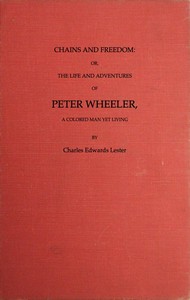
Reading about Clemens’s early self-invention—the raw material before the pen name—I kept thinking about how we shape the stories we inherit. His was a white man’s freedom, earned on the river. Alongside that half-remembered glint of lamplight, I’ve often wondered about the voices his memoirs left out, like Peter Wheeler’s. Chains and Freedom: or, The Life and Adventures of Peter Wheeler, a Colored Man Yet Living — Key Ideas to Explore feels like that quiet counterweight, a different kind of truth waiting in the margins.
There are no reviews for this eBook.
There are no comments for this eBook.
Reader reflection
Before you leave, reflect on the book
Use these questions to collect your thoughts before moving on.
Your progress
0
/
10
2
What was your overall reaction to the book?
3
Would you recommend this book to another reader?
4
What was the reading difficulty like?
5
How well did it match your expectations?
6
How valuable was this book for your own interests?
7
Did you relate to its people, ideas, or situations?
8
Did the book give you something worth debating?
9
What is the main idea you are taking away?
10