1


The Story of Opal: The Journal of an Understanding Heart — Inside the Classic
(0 User reviews)
457
Project Gutenberg
2013
Not confirmed
Whiteley, Opal Stanley -- Diaries; Authors, American -- 20th century -- Diaries; Children's writings, American -- Oregon; Oregon -- Social life and customs
Readers of public-domain and historical texts
Project Gutenberg digital edition
en
Edition facts
Words
85,617
Reading time
373 min
Text sections
10
For The Story of Opal: The Journal of an Understanding Heart — Inside the Classic, the stored edition analysis reports 85,617 words, 6 hr 13 min estimated reading time, and 10 detected text sections.
The text analysis averages about 14.8 words per sentence, while the detected sections provide another way to judge how the source is divided.
Project Gutenberg metadata also associates the work with “Whiteley, Opal Stanley -- Diaries,” connecting these edition facts with the source record’s subject description.
Source:
Project Gutenberg record #43818
Opal Whiteley's reconstructed childhood diary, written in a distinctive voice, records her life in Oregon lumber camps, her animal companions, and her vivid observations of nature and people, blending precise details with imaginative flights.
Editorial Edition Score
4.9/5
★★★★★
★★★★★
Calculated from edition completeness, EPUB availability, text structure and catalogue metadata. Not a user rating.
How this score is calculated
- Description quality20 pts
- Title & short description10 pts
- Source metadata20 pts
- Text length15 pts
- Chapters / structure15 pts
- EPUB file integrity20 pts
Total of 100 points, scaled to a 2.5-5.0 range. Editions with an empty description or a missing EPUB file are not scored.
Edition quality
Public-domain source text
Read the source text
The source text is kept in the dedicated reader, separate from this catalogue record and its commentary.
Opal Whiteley's journal, reconstructed from torn fragments, opens a window into a child's mind that moves seamlessly between the mundane and the transcendent. The diary entries, written in a distinctive idiolect, record her days in Oregon lumber camps with a precision that belies her youth. She notes the sawyers cutting logs, the fringes on overalls, and the scraps men bring from their dinner-pails, yet she also communes with the salal leaves, telling them the death-days of artists and the birth of Handel. This juxtaposition of concrete observation and lyrical fancy defines the work's structure, as Whiteley shifts without warning from cataloging caterpillars to singing bird songs in French to her dog, Brave Horatius.
A Voice of Its Own
The most striking feature of the journal is its language. Whiteley writes in a present-tense, uninflected style that often omits standard verb forms: “I did make a climb upon an old tree-root to have sees of them at work.” She uses “do” as an auxiliary for emphasis, as in “I do so like to sit on a stump.” Her vocabulary mixes childlike coinages (“joy feels all over”) with precise natural-history terms and French bird names learned from her grandfather. This idiolect is consistent throughout the excerpts, suggesting a deliberate or deeply ingrained pattern of speech rather than a mere imitation of adult writing. The effect is a voice that feels both innocent and authoritative, as if the child is translating the world into her own grammar.
Movement Between Scenes
The diary entries are structured around walks. A typical passage begins with departure: “We did go on until we were come near to where were two men of the mill.” Whiteley records each stage of the journey, noting the rustle of salal leaves, the sight of birds, and the actions of her animal companions. She often stops to address the natural world, as when she tells the leaves the date. These pauses interrupt the forward motion, creating a rhythm of walking and observing. The movement is not merely physical; it also shifts between the domestic sphere (minding the baby) and the open pasture where Elizabeth Barrett Browning (a cow) calls her. This constant motion between house, road, and woods gives the journal a kinetic quality, as if the child is always in transit.
Recurring Images and Companions
Certain images recur across the excerpts. The “lumber-camp folk” appear repeatedly, always in twos and threes, carrying dinner-pails, and sometimes offering scraps or moss. Whiteley’s animal companions—Brave Horatius the dog, Thomas Chatterton Jupiter Zeus (a pet, likely a mouse or bird), and cows like Elizabeth Barrett Browning—are named with full formality and treated as interlocutors. She sings to them, cuddles them, and interprets their barks. The natural world is personified: leaves “have little askings,” the sky “sings in blue tones.” These recurring elements create a consistent imaginative landscape where every creature and object has a voice and a history. The child’s world is populated not by generic figures but by named individuals, both human and nonhuman.
The Fragmentary Record
The journal’s backstory is essential to understanding its form. As Ellery Sedgwick recounts in the preface, Whiteley arrived at the Atlantic office with a book of nature writing; only after questioning did she reveal that she had kept a diary, which had been torn up. The pieces were retrieved from storage and reconstructed. This origin explains the episodic, sometimes disjointed quality of the entries. The text we have is not a continuous narrative but a mosaic of surviving fragments, reassembled. Readers should be aware that gaps may exist, and that the diary’s structure reflects both the child’s original habits of recording and the later editorial process of piecing together what remained. The result is a document that feels both intimate and incomplete, a record of a mind that was already, in its own way, a collector of moments.
Approach this journal as you would a field notebook kept by a naturalist who also happens to be a poet. Whiteley’s observations are precise—she notes the number of birds, the cut of overalls, the names of ferns—but her interpretations are lyrical. The diary rewards reading in short stretches, allowing each entry to stand as a discrete encounter. Pay attention to the names she gives her companions and the dates she recites; they are clues to the inner logic of her understanding heart.
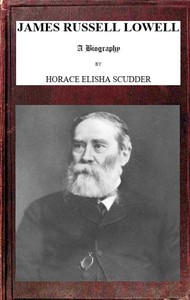
I've spent many evenings with Opal Whiteley's journal, her small hands finding kinship in every creature. She reminds me of Lowell, that other soul who saw the world through a lens of affectionate wonder. Both understood that attention is a form of love. I keep them near each other on my shelf, these quiet companions. James Russell Lowell, A Biography; vol. 1/2 — Themes and Context holds that same gentle spark.
There are no reviews for this eBook.
There are no comments for this eBook.
Reader reflection
How will you remember this book?
Save your reaction, strongest insight, and memorable passage.
Your progress
0
/
10
2
Was reading this book enjoyable?
3
Would you pass this book on to a friend?
4
Did the language feel accessible?
5
How closely did the book connect with your experience?
6
Did anything about the book feel genuinely new?
7
Did you gain anything practical from the text?
8
How clear did the writing feel?
9
Which lesson or insight stayed with you?
10